

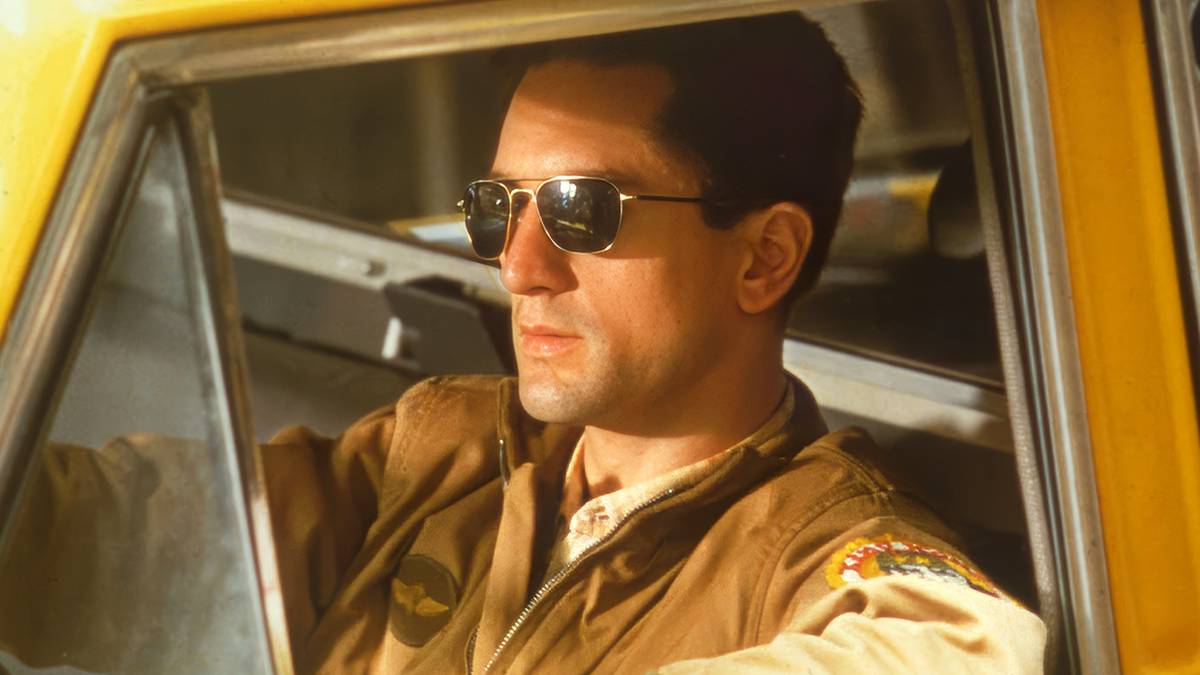
Having directed a career’s worth of masterpieces, it somehow became easy to overlook something as powerful and groundbreaking as Taxi Driver in Martin Scorsese‘s oeuvre. Celebrating its 50th anniversary, the 1976 film about a psychologically troubled Vietnam veteran-turned-insomniac cab driver losing his sanity in the harsh streets of New York City properly announced Scorsese, star Robert De Niro, and screenwriter Paul Schrader as the premier figures in their respective fields. A decade-defining portrait of America’s societal mindset in a post-Vietnam and Watergate world, Taxi Driver‘s influence extends beyond the film medium. Scorsese has made plenty of dark and unflinching movies about violence and emotional suffering, but he never submerged into the darkest depths of the soul quite like he did with Travis Bickle (De Niro). In many more ways than one, the film’s depiction of loners, stalkers, hatred, and vigilantism has made it one of the most prophetic texts of the last 50 years.
‘Taxi Driver’ is a Visual Marvel That’s Impossible to Look Away From
No film has ever captured the feeling of awe and disgust quite like Taxi Driver. You’ll simultaneously want to avert your eyes and keep them glued to the screen. Even beyond the blood-soaked violence (that nearly gave the movie the undesired X rating), Travis’ attempts at connecting with other people, particularly women, and his chilling demeanor are cringe-inducing. As deplorable as his thoughts and actions are, you can’t help but pity this broken man beaten down by life. On the flip side, never has societal alienation looked so gorgeous as it does in Taxi Driver, shot by acclaimed DP Michael Chapman. The film’s visual language is a striking blend of the typical New Hollywood grit with a nightmarish, hallucinogenic distortion of reality that reflects Travis’ warped headspace. Whenever Bernard Herrmann‘s moody saxophone echoes over Travis’ shifts, the film lulls you into another dimension.
Taxi Driver is representative of one of the finest collaborations in film history. American cinema in the ’70s was synonymous with singular, uncompromising visionaries, but Scorsese proved that he was best suited when bouncing off another staunch voice like Paul Schrader. Based on his future movies as a director, one could argue that Schrader was the true “author” behind the film, especially considering that writing it was a therapeutic exercise for him as a lonely and disillusioned young man. Scorsese dampens the transgression of Schrader’s script with a surprising layer of sympathy towards Travis, forcing the audience to recognize that humans are destined to end up like him if we continuously punish ourselves and vent our frustrations at the world. As a stranger in a strange land in Hollywood, Scorsese relates to Travis’ outsider status, simmering on the fringes of society.
‘Taxi Driver’ Predicted the Future of Society and Human Alienation
For the sake of our own world, Taxi Driver has unfortunately been shown to be one of the most prescient films of the last 50 years. “As we know now, tragically, it’s a norm that every other person is like Travis Bickle,” Scorsese said to GQ in 2023. The rise of incel culture, the Red Pill movement, and the manosphere of the last decade has made the assassination attempt on Ronald Reagan, motivated by John Hinckley Jr.‘s infatuation with Jodie Foster‘s Iris character, a footnote in the film’s legacy. Travis embodied the Internet long before anyone had personal computers, and the depths of social media and online communication parallel the character’s loneliness, pent-up rage, and doomsday melancholy.
The general air of despair and hopelessness permeating through everyday life, but especially on all corners of the Internet, causes our modern-day Travis Bickles to resort to drastic measures. It’s not just the disregarded outsiders who exhibit such toxic behavior, as our most powerful political leaders and corporate overlords utilize fearmongering that resembles Travis’ description of the “garbage” and “scum” (words frequently found in an average Truth Social post) that walk the streets. Scorsese and Schrader eerily looked into the future by diving into the most haunted crevices of the human condition, only to see their exploration become the status quo.
Despite its lurid and unsettling subject, Taxi Driver, thanks to the prowess of its lead actor, writer, and director, vaulted to cinematic royalty, and it remains one of the signature American films, full stop. Spawning iconic lines and rich iconography, Martin Scorsese laid the groundwork for his future masterpieces like Raging Bull, Goodfellas, and The Wolf of Wall Street. What you’re watching is provocative, and sometimes appalling, but you can never look away, because there’s something too recognizable about Travis Bickle.
Taxi Driver is available to rent or buy on VOD services in the U.S.

- Release Date
-
February 9, 1976
- Runtime
-
114 minutes
- Writers
-
Paul Schrader
- Producers
-
Julia Phillips, Michael Phillips