

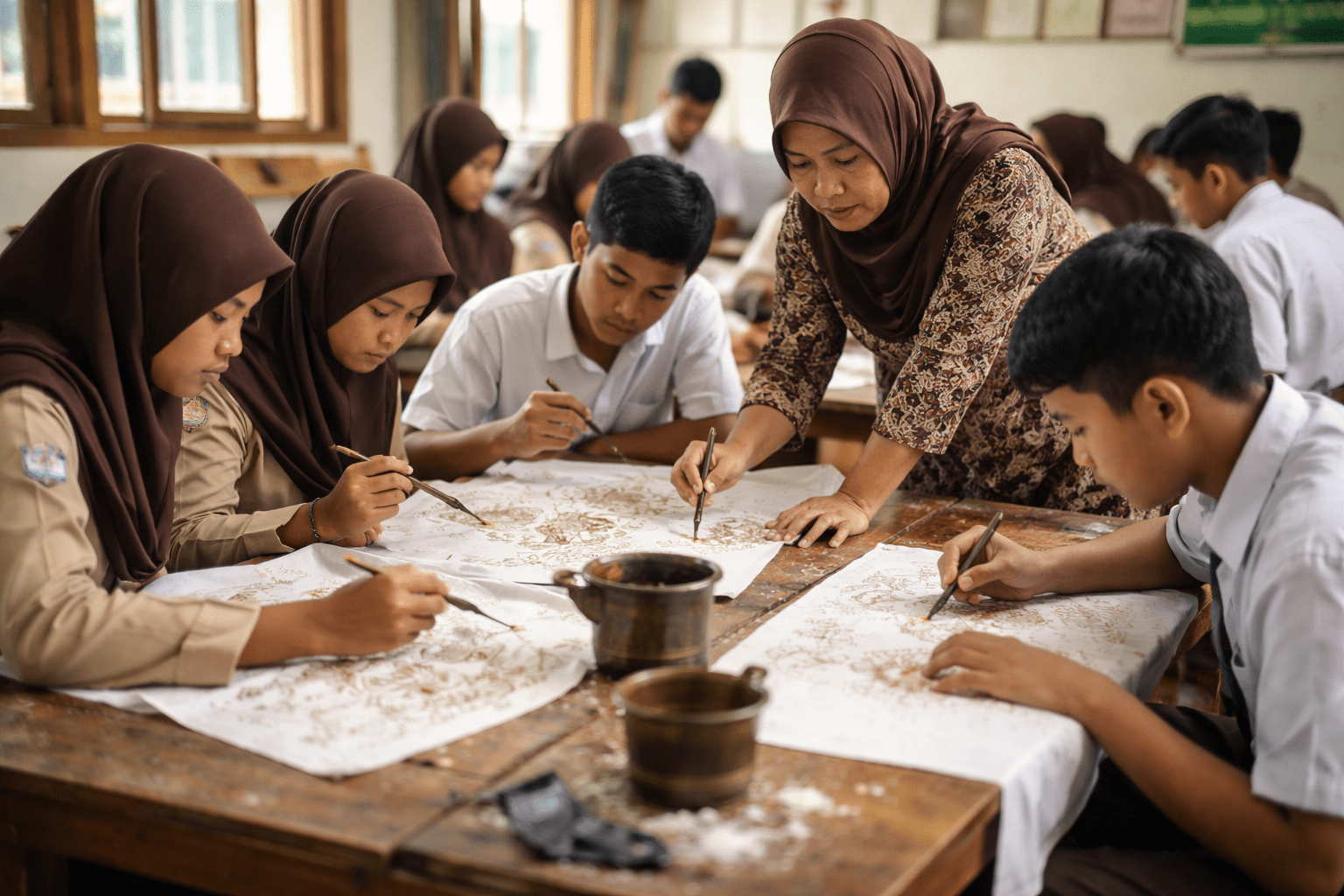
Teenagers often learn history from textbooks, but a new education project shows cultural identity can grow more strongly through practical experience. When students worked with local artisans to make traditional batik fabric, they did not just learn art skills. They developed pride in their heritage and stronger social connections within their community.
Researchers studied a secondary school in East Java where batik making formed part of both classroom teaching and community learning activities. The programme brought together teachers, students, alumni and professional craftspeople, turning cultural heritage into an everyday learning experience rather than a one off cultural event. The findings were published in Jurnal Eduscience.
Students followed a structured process that moved from design ideas to public exhibition. They sketched motifs inspired by plants, regional symbols and local traditions before applying wax, dyeing fabric and finishing their pieces. The work required patience and cooperation, encouraging teamwork as students divided tasks and supported each other through mistakes and revisions.
Schools often struggle to teach arts subjects when specialist teachers are limited. In this case only one teacher handled arts education, so the partnership with artisans filled a practical gap. Craftspeople demonstrated techniques and explained meanings behind patterns while teachers guided reflection and assessment.
The results went beyond craft skills. Students showed greater awareness of cultural meaning, recognising motifs as symbols linked to their region, school and traditions. They also became more engaged socially, discussing designs, helping classmates and presenting their work publicly.
Researchers found the project created a shared learning environment similar to a community of practice. Knowledge passed between generations rather than flowing only from teacher to student. This intergenerational contact helped young people connect tradition with modern life instead of viewing heritage as outdated.
Education systems worldwide face concerns about young people losing connection with local culture due to digital media and globalisation. Cultural education projects such as heritage crafts and community arts are increasingly explored as ways to support well being, belonging and identity formation. The batik programme illustrates how cultural learning can strengthen mental engagement with school by making learning meaningful and collaborative.
The project also changed how success was measured. Teachers assessed participation, cooperation and reflection alongside the quality of the final artwork. Students reported feeling responsible for the outcome because the work represented their community publicly.
Researchers noted some limitations. The study involved only one school and lasted a short time, and long term effects were not measured. However, the model provides a practical template for combining curriculum goals with cultural preservation through community partnerships.
For educators seeking ways to improve student engagement and cultural awareness, the findings suggest hands on heritage education can play a role in strengthening social identity and motivation to learn.