

This blog is part of our Remote Leadership Series. It was written anonymously by a leader currently participating in the 8-week Lead From Anywhere programme. The reflections below are shared with permission.
Week 3 shifted the focus from visibility and structure into communication, clarity, and culture. We look at tools as well as interpersonal styles of communicating, especially what actually happens between people when messaging is imperfect, public, and constant.
My biggest insight? Remote leadership is less about controlling communication and more about designing environments where understanding can happen.
Here are five things that stood out for me this week.
1. Clarity is the real goal
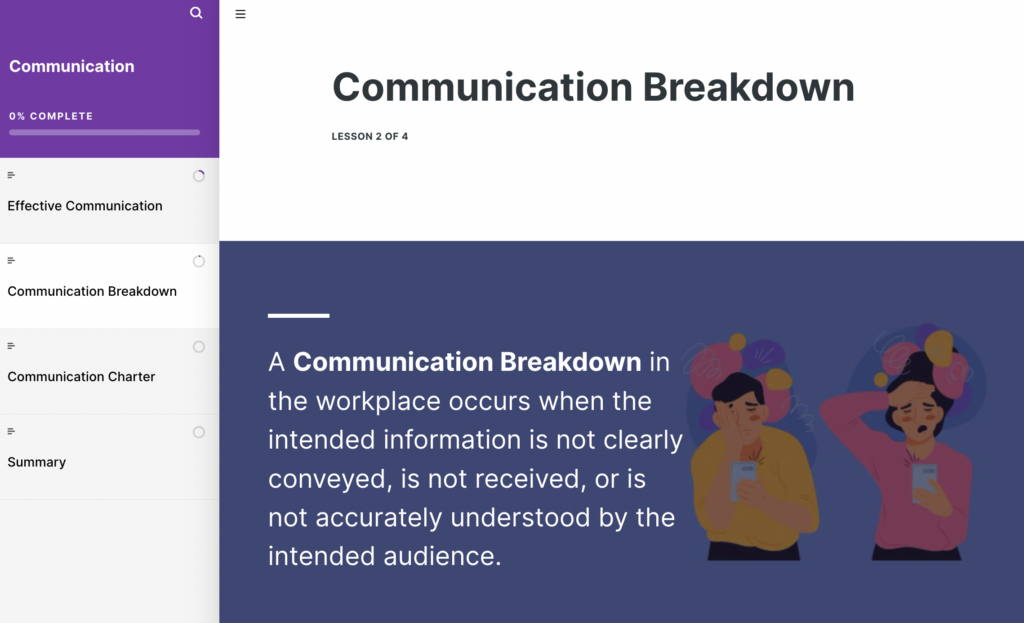
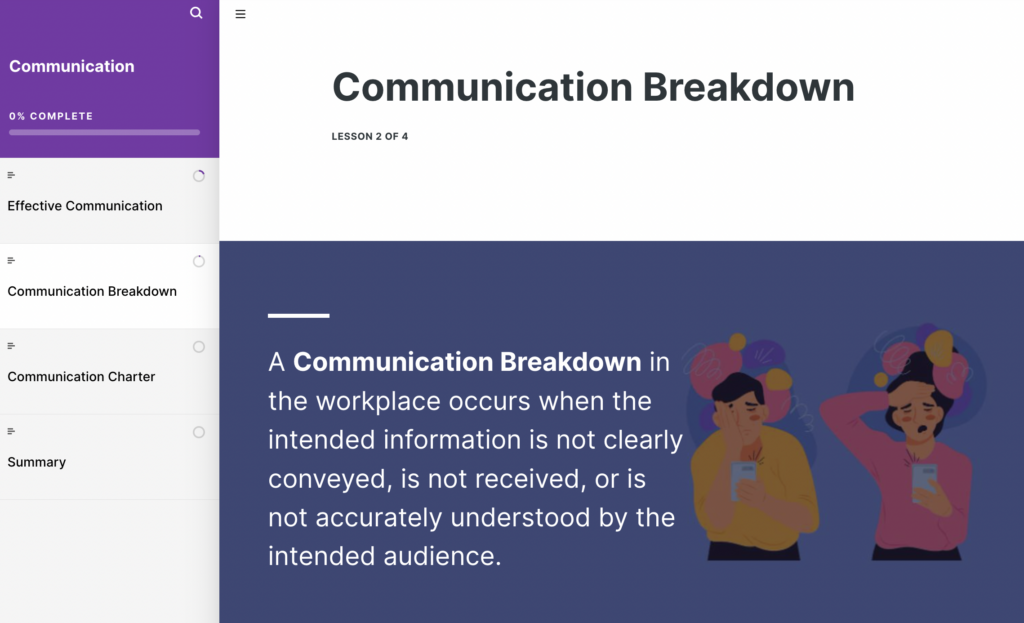
Communication in a distributed environment will always contain gaps. Tone is misread, context is missing, and assumptions can fill the spaces. The aim, therefore, should not be flawless messaging, but to get your point across with clarity and intention.
One discussion challenged the instinct to avoid tension or “politics” in office-based teams. A comment was made suggesting that avoiding the office was a good way to avoid office politics. But I disagree – the same dynamics exist whether they are visible or not. And the leader’s role is to facilitate collaboration in as fluid a way as possible. Tension, hesitation, or resistance often signal something deeper at play, such as unclear expectations, missing context, or invisible hierarchy.
My takeaway: Strong remote leaders do not avoid friction. They design systems that make understanding easier.
2. Hidden blockers are often created by people, not tech
Distributed teams rarely stall because of tools. They stall because of people dynamics – personality clashes, perceived hierarchy, or lack of psychological safety. Psychological safety has been a big part of the course so far, and it is interesting to see all the different elements of business leadership where it plays a part.
One practical approach explored this week was making ownership of tasks and projects explicit through structured responsibility (e.g. RACI) and clear action points. This depends on solid meeting etiquette, agenda-setting and minute-taking. These things can often fall by the wayside in comfortable teams, and it is the leader’s role to insists on good documentation that holds everyone to account in a supportive way.
My takeaway: When ownership is visible, ambiguity reduces. In a distributed environment, conversations and context will never be “overheard”, so they must be clearly outlined from the beginning.
3. Strong communication rests on five deliberate practices
This week reinforced five core communication foundations in distributed teams:
- Documentation — knowledge must be written, not assumed
- Async-first communication — reflection improves clarity
- Structured meetings — purpose and outcomes matter
- Communication cadence — balance signal vs noise
- Intentional informal connection — culture must be designed
Without these, communication becomes reactive rather than reliable.
My takeaway: Remote communication is a system, not a habit.
4. Comfort and competence in remote work are not the same
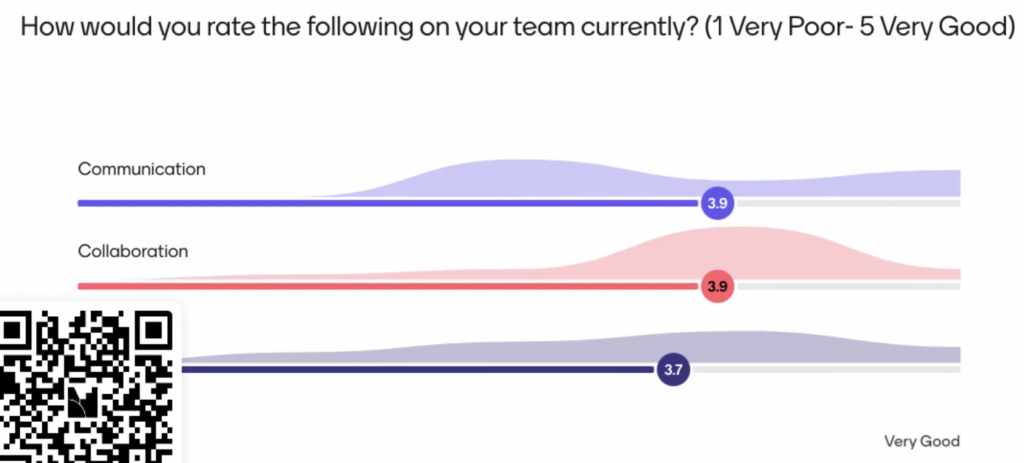
Experience working remotely does not always equal effectiveness. Some people become comfortable working remotely, but perhaps not as collaborative as they might be in an office. The discipline around effective remote working must be learned and iterated constantly. Some people struggle because of a lack of skills but others have personal preferences that might hinder effectiveness – for example, a preference for asynchronous work when problem-solving might require a video call to address an emerging issue. Leaders must distinguish between resistance and learning.
My takeaway: Remote leadership means coaching people through a new way of working, not assuming they already know how.
5. Communication is public
In distributed teams, communication often happens in shared digital spaces. This makes leadership behaviour highly visible and culture-shaping.
Tone becomes culture. The language used will signal psychological safety. Behaviour becomes the model.
We also explored the difference between collaboration and intervention. When leaders step in too forcefully – especially in public channels – it can feel like escalation rather than support. Guidance should feel steady, not alarming.
A good example was given of an issue arising in a shared Slack channel, and the leader spent 10 minutes thinking about the right way to phrase a reply. In the end, he asked for a 1:1 call to address the issue his colleague, solved the problem, and then updated the steps taken in the shared channel – to keep visibility and transparency of process and culture. None of these things are easy in the moment – they are always delicate.
My takeaway: Leaders don’t just manage communication – they are modelling culture in how they communicate.
Reflections on Week 3
Week 3 clarified something important: remote teams don’t struggle because of distance – they often struggle because of unclear communication and unmanaged culture.
The real work of distributed leadership is:
- Creating clarity
- Making ownership visible
- Reducing ambiguity
- Building trust through communication
- Modelling behaviour in public spaces
Next week, we will move deeper into alignment, culture, and sustaining performance over time. It feels like this is the architecture that allows distributed teams not just to function, but to thrive.
The February cohort of Lead From Anywhere is now open. Full funding to the value of €1,350 per person is available until 19th February. Limited availability – first come, first served.