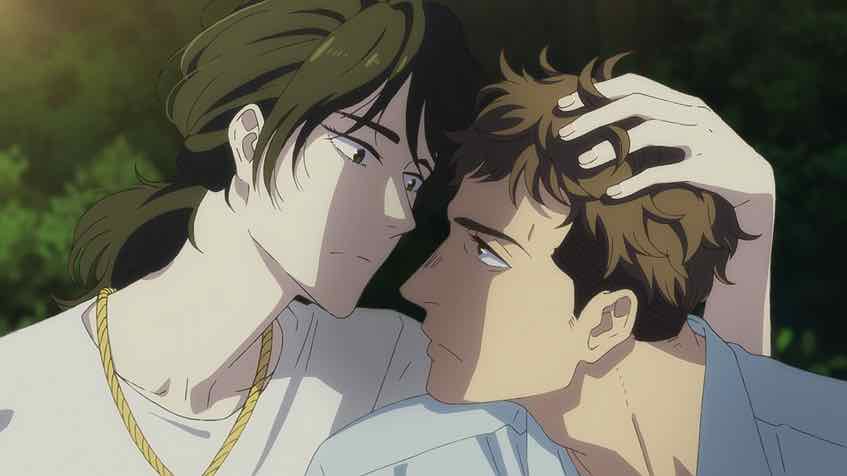
 First off, apologies for the lateness of this review. My weekly routine got sort of messed up (the Makio parallels just write themselves). And then I didn’t want to push back my usual Tuesday shows (GK and Vigilante) and Ikoku Nikki wound up getting shuffled and re-shuffled. It’s a series I really want to be able to digest at leisure, because it’s dense as hell and just as deep. There’s a lot going on with these people and the show doesn’t lend itself to drive-by viewing, never mind criticism.
 I also want to vent a little, because there’s an annoying trend with the discussion on Ikoku Nikki. I keep seeing Makio referred to as being neurodivergent or on the (autism) spectrum. First of all there’s nothing wrong with those things – in point of fact as an OCD person I could be classified as the former, depending on whether you include OCD under that umbrella. But those have become buzzwords for people who don’t understand what they mean. In my experience I’ve found extroverts tend to consider introversion to be synonymous with the spectrum, and it’s not. That’s an oversimplification and it disrespects both people on the spectrum and introverts generally.
 Here’s the thing. As Ikoku Nikki keeps pointing out, introverts and extroverts can never really understand each other, which is something I believe 100%. The difference is, introverts – by their nature – tend to take a “let it lie” approach to this. Extroverts, by their nature, tend to want to “help” introverts “fix” themselves (“tend” is the operative qualifier here). We see this dynamic playing out over and over between Asa and Makio, both of whom mean well. “Leave me be” may as well be the first line of the introvert bible, but extroverts struggle with the concept. Makio’s angst when she realized Asa was on summer break and would be home every day – that was an incredibly real moment.
 One of the key developments of this episode was certainly the one-on-one conversation between Makio and Emiri. There’s a lot of speculation that Emiri may be a lesbian, and indeed there have been hints to that effect. Whether she is or not, she’s clearly not comfortable being smushed into the conventional relationship box as her mother (who I’m convinced is going to be a big problem, especially if she gets wind of the conversation that follows) is trying to. Makio is passionate about this “what you want is your own business” idea. It’s not weird not to want to get married and have kids – no weirder than to want to do those things. But society tends not to see it that way.
 Makio, being a loner, probably doesn’t realize the potential repercussions of stuff like recommending movies to someone else’s teen (Fried Green Tomatoes is another potential trigger for Tiger Mom to go off). But this conversation goes two ways, and without realizing it Emiri (who’s no more self-aware than a typical 15 year-old should be) pushed Makio to think about her relationship with Kasamachi-kun. Makio talks about “refuge” a lot this week. Like how fiction was a refuge for her growing up, but how some people (like the eager beaver lawyer) “don’t need storytelling” in their lives. Shingo is a refuge for Makio – that much is indisputable in my view.
 Let me just say, I adore this relationship. I like both of them as individuals, and love them together. They’re so very relatable, so genuine. So real, to use that word again. Makio faces the difficult conundrum every introvert contemplating a serious relationship does – can I force another person to adapt to how I am? It’s an inescapable truth for Makio that in the end she’ll always be most at ease on her own, even if she’s in love with another person (like Shingo). Is it fair of her to ask Shingo to accept that? He’s willing to bend over backwards for her – “if being your boyfriend makes you hate me, I just want to be your friend”. But that makes this decision even harder for her.
 “I don’t deserve help from anyone” is another thing people like Makio will instantly recognize in their own experience. Makio is not wrong to consider fairness for Kasamachi when it comes to being a couple. But the flipside is, what right does she have to decide for him? It’s not for her to say what he is and isn’t willing to accommodate in a relationship – that’s his business. Shingo comes off as a very grounded and settled guy – someone who can adapt to a lot. Makio obviously thinks he’s hot. Asa already loves him. I think it’s a valid question whether it’s better – for either party – for Makio to be with anyone. She’s right to ask it. But if there is someone, it’s hard to imagine anyone being a much better match than Shingo seems to be.