

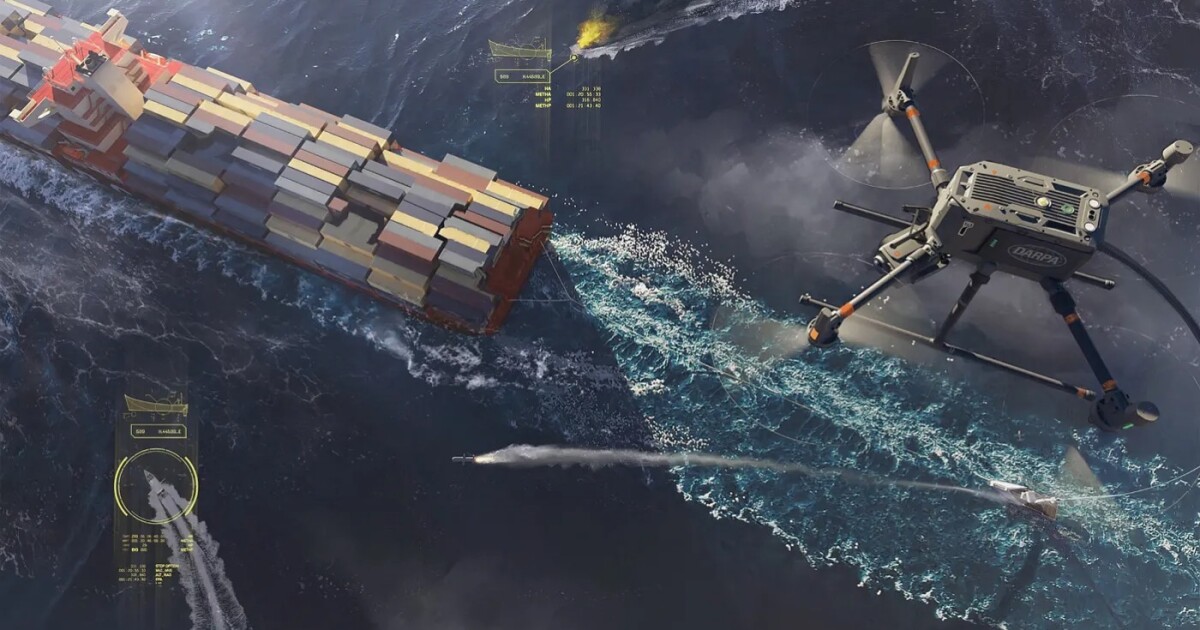
DARPA and Raytheon have teamed up to tackle one of the growing threats to commercial and logistical shipping: attacks by drones. The Pulling Guard project aims to develop a towed platform that trails behind ships, providing detection and countermeasure capabilities.
If you have one of those apps that allow you to track ships, you might want to have a look at the Black Sea, where something peculiar is happening. Normally, shipping traffic tends to move directly from point A to point B, allowing for the curvature of the Earth and any obstacles along the way. However, in 2026, Black Sea traffic is spending much of its time hugging the southern coastline – particularly along Turkey’s shores.
That’s because Ukraine, despite not having a conventional navy, has been disrupting Russian shipping using a variety of drones, both airborne and seaborne. As a result, vessels of all nationalities are keeping as far away as possible to avoid being caught in the crossfire of uncrewed weapons.
Unfortunately, tit’s a problem that’s becoming all too common in conflict zones. Similar incidents have occurred in the Red Sea and the Strait of Hormuz, and there have even been recorded cases in the Baltic. Worse still, the world’s navies are simply not equipped to provide the level of protection required against terrorism, piracy, and regional wars. The result is detours, delays, and huge increases in shipping and insurance costs, along with disruptions to the world’s vital supply lines.
That’s where Pulling Guard comes in.
DARPA
One way of handling the drone threat would be to arm merchant ships and equip them with sensor suites. Unfortunately, that tends to run up against all sorts of legal and political obstacles, not to mention the difficulty, expense, and scheduling challenges involved in modifying commercial ships.
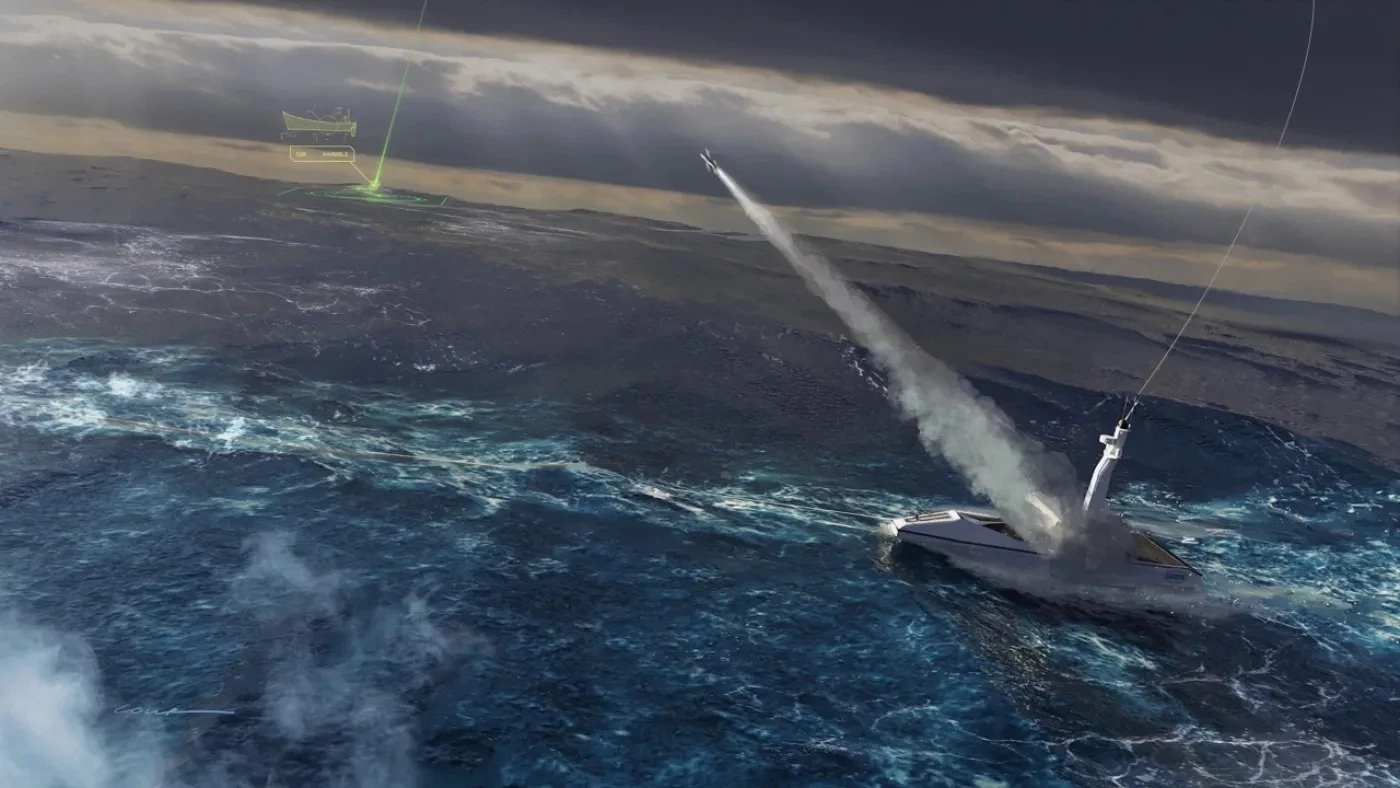
To avoid these issues, DARPA is pursuing a towed, semi-autonomous platform that trails behind a host vessel. It is conceived as a multi-layered sensing and countermeasure solution consisting of the towed platform itself, a tethered drone, and a suite of high-performance electro-optical and infrared (EO/IR) sensors that use the drone as an elevated vantage point.
Data from these sensors feeds into software designed not only to identify threats but also to remain resilient and secure enough to to withstand cyber-interference. The system is intended to be overseen by a single remote human operator who can monitor multiple Pulling Guard units simultaneously and has the final authority to engage any threats. While DARPA has not specified the countermeasures that may be employed, they could include electronic warfare systems, directed-energy weapons, missiles, or other weapons.
Pulling Guard is currently progressing through two development phases. The first phase, expected to run over the next 18 months, will focus on platform development, sensor integration, and simulated engagements to refine the system’s software. Phase two will move into live testing with operational launchers and full end-to-end engagement demonstrations.
“Through this development, we are advancing critical security technologies for commercial shipping in regions like the Red Sea,” said Colin Whelan, president of Advanced Technology at Raytheon. “By integrating our proven expertise in command and control, high-performance sensing, and effectors, we will deliver a scalable, cost-effective solution that minimizes risks to both cargo and naval assets.”
Source: Raytheon